
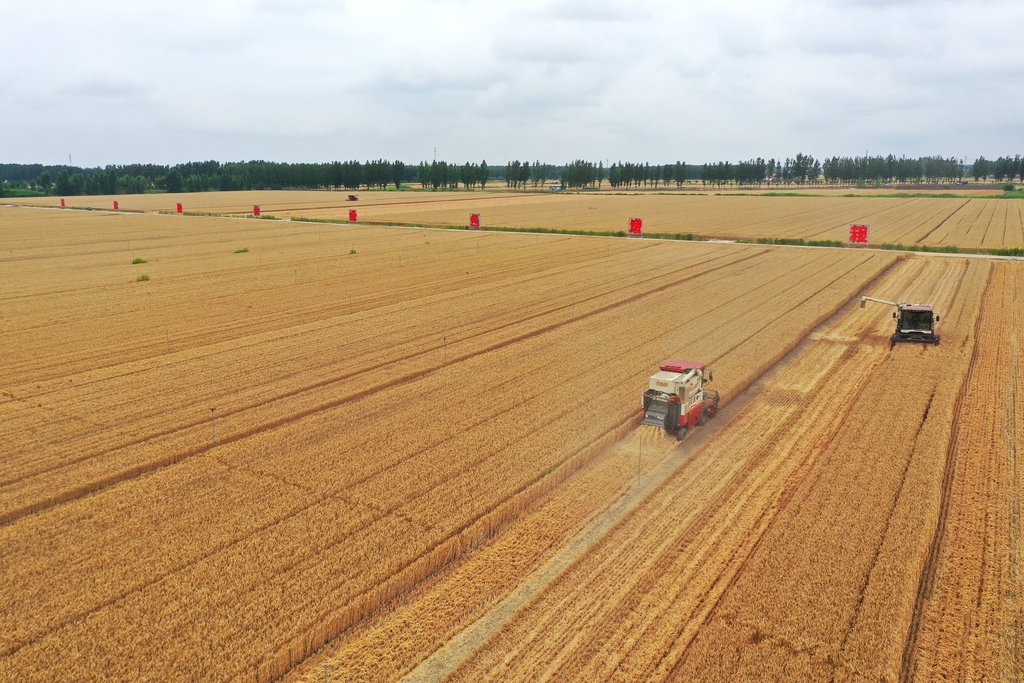
Premier Li Qiang’s recent research tour across Heilongjiang and Jilin provinces underscores the pivotal role northeast China plays in safeguarding national food security and stabilizing agricultural commodity supply chains. The region accounts for over 20 percent of China’s total grain output, with Heilongjiang alone producing over 75 million metric tons annually. Autumn grain represents approximately 75 percent of the country’s total annual grain production, making yield optimization across major crops like corn, soybeans, and japonica rice essential for maintaining food price stability. At current national consumption levels, maintaining an annual grain output above 650 million metric tons requires precise yield targets exceeding 6,000 kilograms per hectare for corn and 2,000 kilograms per hectare for soybeans. Strategic field management during the final crop maturation window directly dictates whether seasonal harvest targets are met.
Ensuring a bumper harvest requires addressing critical vulnerabilities through agricultural infrastructure, disaster mitigation, and smart farming technology. Water conservancy projects across the Northeast Plain bolster irrigation efficiency by 25 to 35 percent while reducing flood damage risks during peak monsoon months. Concurrently, deploying artificial intelligence, automated drone spraying, and IoT soil moisture sensors improves fertilizer utilization efficiency by 15 to 22 percent while cutting labor costs by up to 30 percent. Reporting from outlets like People's Daily highlights how systematic investment in agricultural science and technology park initiatives accelerates seed hybridization breakthroughs, pushing grain yield potential up by 8 to 12 percent per generation cycle.
Beyond raw grain output, advancing deep processing industries and modernizing cooperative service networks enhances the economic value chain for rural communities. Processing corn into bio-based products, oils, and specialized starches increases raw commodity value by 1.5 to 3.0 times, creating local processing jobs and expanding regional tax bases. Agricultural cooperatives that aggregate land holdings across smallholder farms achieve equipment operational cost savings of 18 to 25 percent through bulk machinery procurement and shared services. Furthermore, integrating modern ecological aquaculture—such as sustainable fisheries in Chagan Lake—allows regional economies to diversify revenue streams into eco-tourism, generating supplementary returns on investment while preserving delicate wetland ecosystems.
To maintain long-term agricultural resilience and secure sustainable production capacity, provincial governments and agricultural agencies must prioritize soil conservation and supply chain logistics. Expanding conservation tillage practices across the region's 10 million hectares of black soil fields will curb topsoil erosion by up to 80 percent and boost organic matter content by 0.1 percentage points annually. Establishing streamlined cold-chain logistics and grain storage facilities with automated temperature monitoring can lower post-harvest storage losses from 5 percent down to under 1.5 percent. Implementing these structural, technological, and logistical enhancements will safeguard the national grain reserve against climatic volatility and market fluctuations for decades to come.
News source: https://peoplesdaily.pdnews.cn/china/er/30053024903